

Your body already knows
something is hard.
Here is why.
When the moment gets overwhelming — for a child, for an adult, for anyone navigating something difficult or heightened senses — the body responds before the mind catches up. Understanding why that happens is the first step to moving through it differently.
The hard feeling is not weakness.
It is your nervous system doing its job.
When something feels threatening — a medical procedure, an unfamiliar environment, a sudden change, an overwhelming emotion — the nervous system responds automatically. Before thinking. Before words. Before anyone can reason their way through it.
This is not a flaw. It is the body protecting itself. The nervous system moves fast because in the moments it was designed for, speed mattered more than nuance.
The challenge is that the same response that keeps us safe can also keep us stuck. In cycles of anxiety before appointments. In emotional overwhelm that arrives without warning. In patterns that persist long after the hard moment has passed.

Four things that happen
before anyone has found the words.
When the nervous system detects a threat — real or perceived — it triggers a cascade of responses that happen faster than conscious thought. Understanding these is not about fixing them. It is about meeting them where they are.
The brain goes into protection mode
The brain's threat-detection centre fires before the thinking brain gets involved. Rational thought takes a back seat. This is not stubbornness or bad behaviour. It is the nervous system doing exactly what it was designed to do.
The body prepares to respond
Heart rate rises. Breathing shortens. Muscles tighten. The body is readying for action — fight, flight, freeze, or collapse. These physical responses are automatic. They do not wait for permission and they do not respond to logic alone.
Feelings become overwhelming
When the nervous system is activated, emotions amplify. What might feel manageable in a calm state can become completely overwhelming in an activated one. This is not overreacting. It is the nervous system at full volume.
The pattern can stay active long after
Without support, the nervous system can remain in a heightened state — even when the original threat has passed. Patterns form. Responses repeat. What started as a single hard moment can become a recurring way of experiencing the world.

The nervous system does not respond to what we know. It responds to what it feels. That is why the right tool — something to hold, something to see, something familiar — can do what words alone cannot.
— Lakunakai® · Built from lived experience
Prepare. Regulate. Process. Reinforce.
Four stages. One complete cycle of support.
Every Lakunakai tool was designed around one of these four stages. Together they cover the full arc of a hard moment — before it arrives, during it, after it, and in every setting the person moves through between moments.
Before the hard moment
Preparing the nervous system before a challenge reduces the threat response when the moment arrives. A familiar tool, a known skill, a shared language — these prime the body for what is coming.
During the hard moment
When the nervous system is activated, the body needs something to anchor to. Gentle weight, a familiar character, a physical skill to return to — these work because the body understands them before the mind does.
After the hard moment
Once the moment has passed, the nervous system needs help completing the cycle. Naming what happened. Working through what was felt. Deciding what to carry and what to release. Processing closes the loop.
Between the hard moments
Coping skills build through repetition. Keeping the same language, the same characters, and the same tools visible between moments means the skill is ready before the next moment arrives.
The nervous system responds
to what it can feel and see.
This is why Lakunakai tools are designed the way they are. Not as distractions. Not as rewards. As tools that speak directly to what the nervous system understands — physical sensation, familiar cues, and consistent language.
Gentle weight calms the body
Weighted tools apply gentle, even pressure that activates the parasympathetic nervous system — the part responsible for calm and safety. This is why the Supportive Little Buddy does not need to be explained. The body already knows what to do with it.
Familiar characters reduce threat
When the nervous system is in protection mode, the unfamiliar feels threatening. A familiar character — one the child has held at home, in school, and in clinic — signals safety before a single word is spoken.
Built-in skills provide a pathway
Grounding, breathing, present-moment awareness, and cognitive reframing are evidence-informed nervous system regulation skills. Built directly into each buddy, they give the child — and the adult supporting them — a clear path through the overwhelming moment.
Shared language creates safety
When the same tool and the same language shows up across home, school, clinic, and therapy — the nervous system learns that support is consistent. This consistency is what allows the skill to become automatic over time.
Every Lakunakai tool was built
for a specific moment in the cycle.
 Prepare › Regulate
Supportive Little Buddy
Weighted. Familiar. Built-in coping skill. Works before the moment arrives and during it. The nervous system's anchor when everything else feels unstable.
Find their buddy Prepare › Process
Doctor Play Set
Role-play prepares the nervous system before medical experiences by making the unfamiliar familiar. Also supports processing after an experience through guided play.
See the Doctor Play Set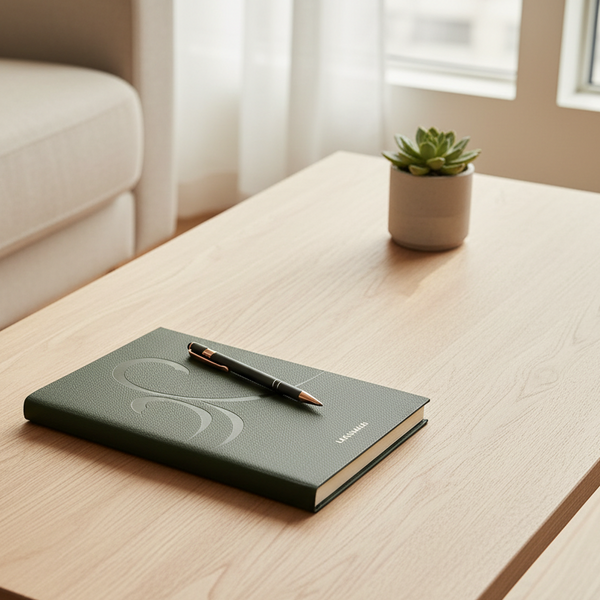 Process › Release
Think It Out Journal
After the moment passes, the nervous system needs to complete the cycle. The journal provides the method — write it, work through it, tear it out and release what no longer needs to be carried.
See the journalSee the full Prepare › Regulate › Process › Reinforce framework ›
The hard moment arrives
whether we are ready or not.
The nervous system cannot be argued with. But it can be supported. With the right tools, the right language, and a consistent approach — the overwhelming moments become something you move through together rather than survive alone.
