


LAKUNAKAI®
Ensemble de jeu de docteur
Ensemble de jeu de docteur
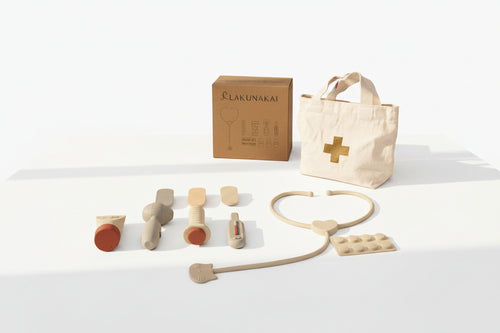
Le coffret Docteur est fabriqué à 100 % en silicone de qualité alimentaire et conçu pour une utilisation répétée et sûre.
Il permet aux enfants d'explorer les outils médicaux courants grâce à des jeux de rôle guidés, les aidant ainsi à se familiariser avec les expériences à venir.
Associez-le à un petit compagnon de soutien pour pratiquer des techniques d'adaptation avant les rendez-vous, les interventions ou les visites à l'hôpital.
Nos jouets de docteur sont fabriqués en silicone 100 % alimentaire, sans BPA, sans PVC, sans phtalates et sans plomb. Leurs bords arrondis garantissent une sécurité optimale et minimisent les risques d'accidents.
Impossible de charger la disponibilité du service de retrait


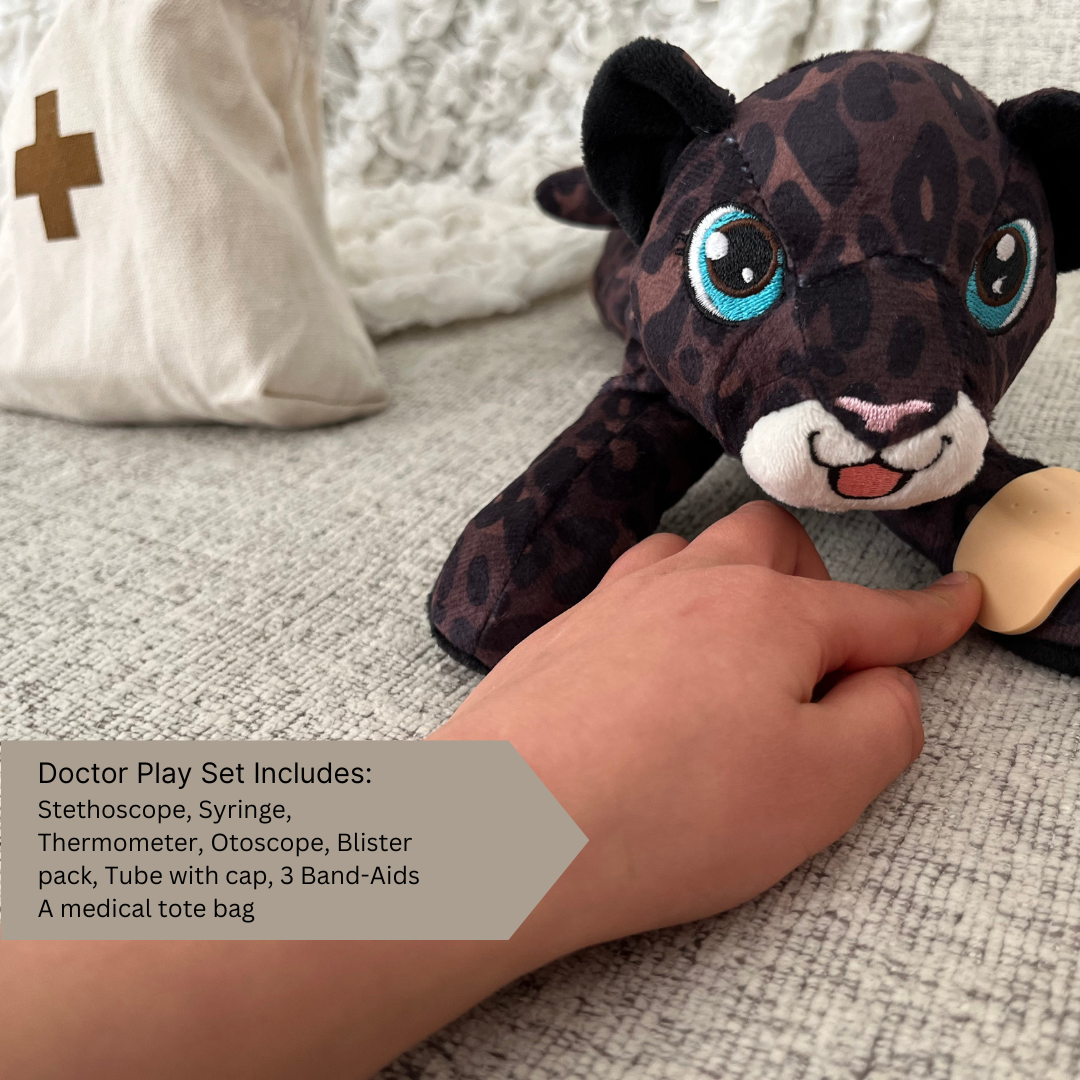
You just put them
in charge of something.
Medical experiences are hard partly because children have no control over any of it. You just changed that. You gave them the tools. You made them the doctor. And that — more than almost anything else — is what makes the difference between a child who dreads what is coming and one who feels ready for it.
That is not a small thing to give someone.
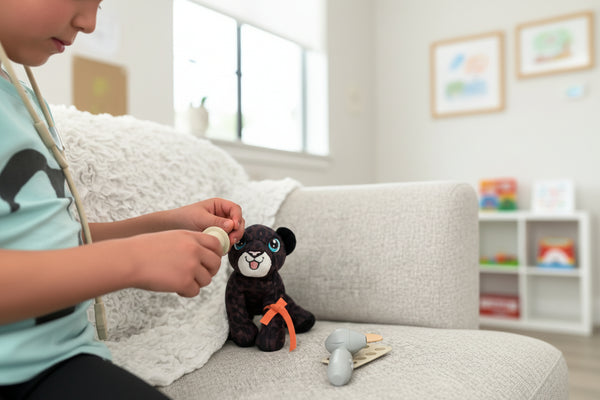
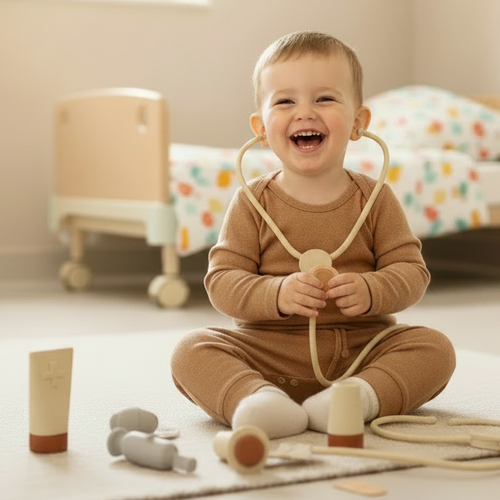
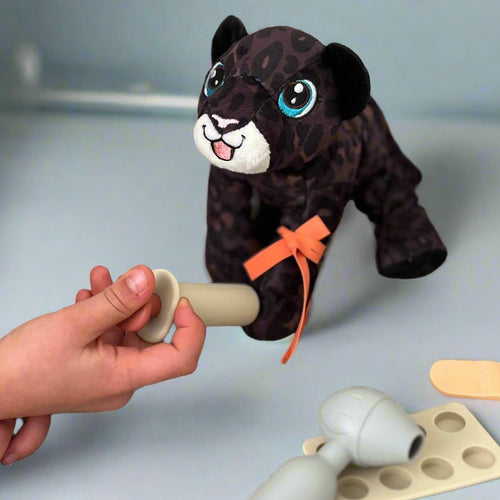
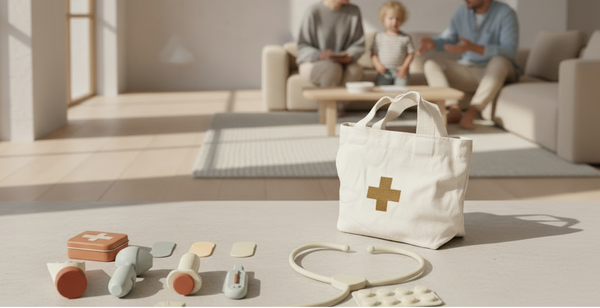
Our medical intervention was one we couldn't prepare for. After, this set became a regular part of play for months — because she was now smart. She knew all the language. She knew all the tools. She had made sense of something that happened to her body, and she owned it.
— Tara · Lakunakai Founder
On processing after an unexpected medical experience
You are in good hands.
Here is what you need to know.
The moment a child picks up a stethoscope and listens to your heartbeat, the stethoscope stops being something that is done to them. That shift — from receiver to operator — is what changes the experience. Play is how children process what they cannot yet put into words. Whether the appointment is ahead or already behind them, working through it with these tools gives the nervous system a way to meet the unknown on safe ground, at their own pace, until it stops feeling like a threat.
The most powerful thing you can do is hand over the tools and become the patient. No instructions needed. Let them use the stethoscope on you. Let them be the one holding the otoscope. Let them decide what happens next. The play that children direct themselves — where they are the one in charge — is the play that actually moves something. You do not need to get it right. You just need to let them lead.
They do different jobs and they work better together. The Doctor Play Set handles the knowing — familiarity with the tools, a sense of control, a way to process what happened. The Supportive Little Buddy handles the feeling — the weight, the grounding, the steady thing to hold when the body takes over in the room. Prepare with the play set. Regulate with the buddy. Many families find one and then reach for the other once they see what the first one does.
Two things that complete
what the play set started.
 During the appointment
Supportive Little Buddy
Every Lakunakai® play set handles the knowing — familiarity with the tools, a sense of control, a way to prepare or process. The Supportive Little Buddy handles the feeling — the weight, the grounding, the steady thing to hold when the body takes over in the room. They do different jobs. They work better together.
From $49.99
Find their buddy After the appointment
Think It Out Journal
Once the appointment is over, the processing continues. The Think It Out Journal gives children a simple, structured space to write through what happened — putting words to it, making sense of it, closing the loop so it does not stay stuck.
$19.98
Shop the JournalSee all medical preparation tools: Doctor Play Set collection › · For clinic and therapy spaces: Visual Coping Tools ›
You didn't just buy a play set.
You put them in the driver's seat.
A child who has been the doctor — who has held the tools, asked the questions, and been in charge of the experience — is a different child walking through that door. More ready. Less afraid. More in control of something that usually feels entirely out of their hands.
